
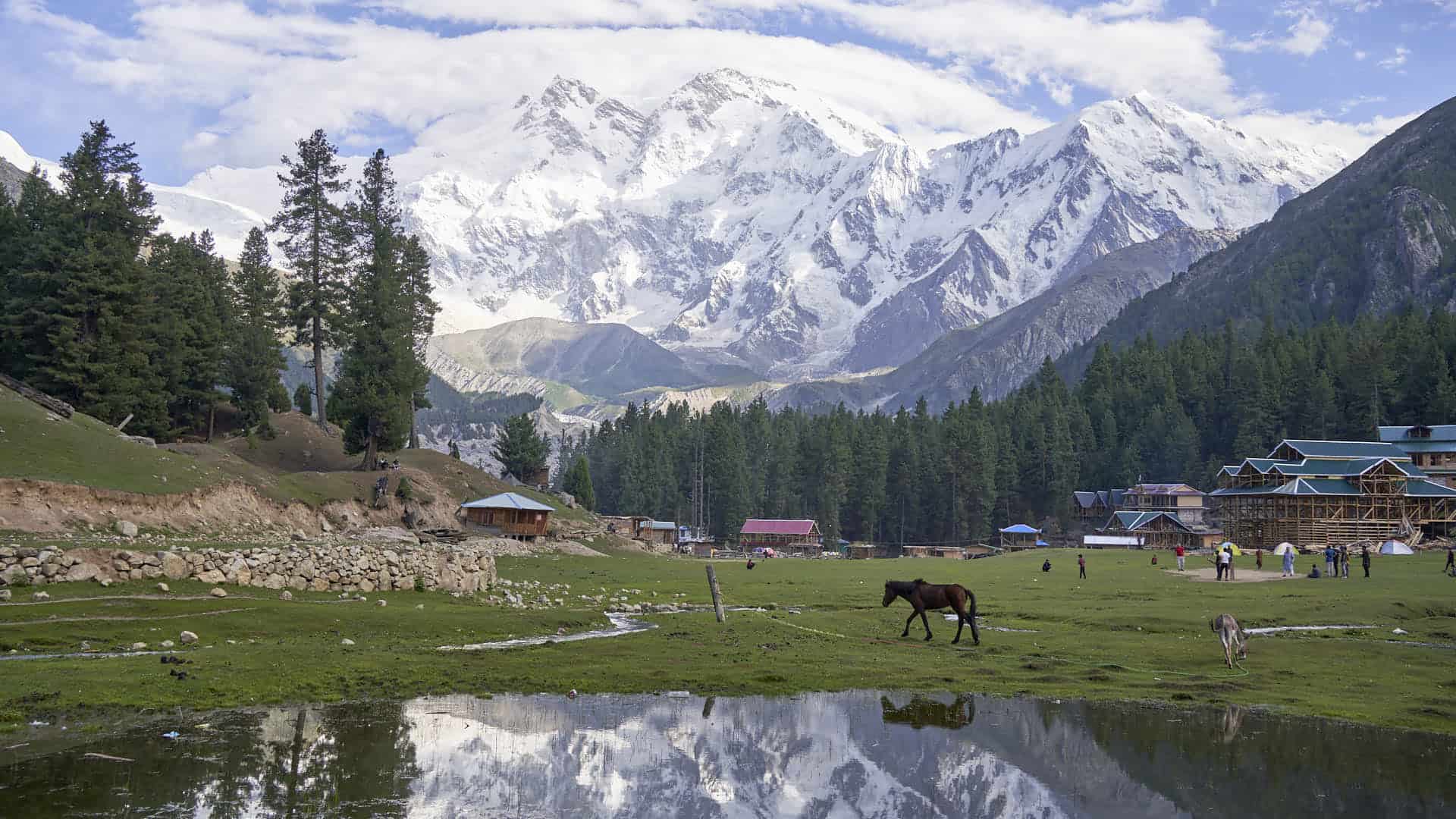
Discover Pakistan’s top 5 tour operators for northern areas in summer 2026. Compare affordable Hunza valley tours, Skardu tour packages, family holidays in Gilgit-Baltistan, and eco-friendly northern Pakistan vacations — with expert insights on safety, sustainability, and booking tips.
Introduction: Where the Karakorams Call
Imagine standing at the edge of Attabad Lake as the first amber light of a June morning turns the water into hammered turquoise. The apricot blossoms of Hunza Valley have already come and gone, but the high-summer air carries their ghost — cool, sweet, and slightly electric with altitude. Across the valley, Rakaposhi’s white shoulder catches the sun as if the mountain itself is waking up. This is northern Pakistan at its most intoxicating, and in summer 2026, the world is finally paying attention.
For years, the region’s sublime geography — a collision of the Karakoram, Himalayan, and Hindu Kush ranges — was an open secret among adventure travelers. Then came a combination of forces that pushed it into the global consciousness: post-pandemic wanderlust, Forbes naming Pakistan among the world’s most compelling emerging destinations, a 40% reduction in e-visa processing times, and — perhaps most critically — the expanded, paved, and digitally navigable Karakoram Highway (KKH), now supporting year-round heavy tourism traffic after its 2025 infrastructure overhaul.
The surge is measurable. According to Pakistan’s Ministry of Tourism and regional Gilgit-Baltistan (GB) tourism boards, summer 2026 bookings for Pakistan northern areas tour packages are up approximately 25% compared to the same period in 2024 — driven by international arrivals from Europe, the Gulf, China, and an increasingly adventure-hungry South Asian middle class. Tourism now contributes close to 7% of Pakistan’s GDP, a figure the Financial Times has highlighted as emblematic of the country’s broader economic reorientation toward services and soft exports.
But growth brings complexity. Post-2025 flood recovery has reshaped some routes. Climate anxiety is nudging affluent travelers toward operators with verifiable sustainability credentials. And families researching family holidays in Gilgit-Baltistan 2026 increasingly demand certified guides, reliable communications, and insurance-backed itineraries. Choosing the right tour operator, in other words, has never mattered more.
Here are the five operators defining the experience in 2026 — and what separates the exceptional from the merely adequate.
The Top 5: A Comparative Overview
| Operator | Best For | Price Range (per person) | Group Size | Sustainability Rating | Flood-Safe Routes |
|---|---|---|---|---|---|
| Exploria Pakistan | Cultural immersion | $800–$1,800 | 4–16 | ★★★★☆ | Yes |
| Hunza Adventure Tours | Budget family trips | $350–$900 | 2–20 | ★★★☆☆ | Yes |
| Wild Frontiers Travel | Luxury tailored adventures | $2,500–$6,000 | 2–10 | ★★★★★ | Yes |
| Vertical Explorers | Trekking & mountaineering | $600–$2,200 | 4–12 | ★★★★☆ | Selective |
| Trango Adventures | Eco-tours & community travel | $700–$1,600 | 2–14 | ★★★★★ | Yes |
1. Exploria Pakistan — The Cultural Cartographers
Price Range: $800–$1,800 per person | USP: Deep-dive local immersion
If the goal is to understand northern Pakistan rather than merely photograph it, Exploria remains the most intellectually rigorous operator in the field. Their summer northern Pakistan tour packages are built around access — to village elders in Altit Fort, to women-run saffron cooperatives in Shigar, to Wakhi nomadic communities along the Khunjerab corridor that most operators don’t know exist.
Their 2026 flagship, the Silk Road Reborn itinerary, threads Gilgit, Hunza, Gojal, and Sost over 12 days, embedding guests in local households for two nights each. It is part travelogue, part anthropology — and it has developed a devoted following among readers of outlets like The New York Times Travel section and The Washington Post’s climate and culture desk.
Strengths: Unrivaled local network; LGBTQ+-inclusive policies; carbon-offset partnerships with the Aga Khan Development Network. Considerations: Less suitable for pure adventure trekkers; booking windows now extend 4–5 months due to demand.
2026 Traveler Review (verified): “I’ve done 40+ countries. Exploria gave me access I’ve never had elsewhere — breakfast with a 90-year-old former polo champion in Chitral who remembered the last British political agent. Extraordinary.” — Marcus H., Berlin
2. Hunza Adventure Tours — The Family Specialist
Price Range: $350–$900 per person | USP: Affordable Hunza valley tours 2026
Accessibility is a value, not a compromise — and Hunza Adventure Tours has built its reputation on proving exactly that. As the most competitively priced reputable operator in the region, they serve a crucial segment: the growing Pakistani diaspora returning from the UK, US, and Gulf to show their children where they came from, alongside first-time international visitors testing the waters before committing to a longer expedition.
Their affordable Hunza valley tours 2026 lineup includes a popular 7-day family package that covers Karimabad, Eagles Nest viewpoint, Borith Lake, and the Attabad tunnel experience — with child-appropriate trekking grades, family rooms in certified guesthouses, and a WhatsApp-based real-time support channel that parents reliably cite in reviews.
Post-2025 flood adjustments are notable: the operator rerouted several lower-valley day trips away from vulnerable nala crossings and now includes a flood-awareness briefing in all orientation sessions — a small but meaningful signal of operational maturity.
Strengths: Exceptional price-to-experience ratio; dedicated family-facing logistics; strong local driver and guide network. Considerations: Less personalization than premium operators; group sizes can reach 20 in peak July–August.
2026 Traveler Review (verified): “Traveled with my parents and two kids aged 8 and 11. The guides were patient, knowledgeable, and genuinely warm. We didn’t feel like tourists — we felt like guests.” — Ayesha R., Manchester
3. Wild Frontiers Travel — The Luxury Architects
Price Range: $2,500–$6,000 per person | USP: Bespoke, high-end northern Pakistan adventures
Wild Frontiers operates at the intersection of high adventure and five-star sensibility — a combination that sounds contradictory until you’re eating a slow-cooked lamb karahi under a starfield at 3,400 meters, in a tented camp that materialized from apparent wilderness by a team of 12 porters. Their clients are typically Economist readers who want context as much as comfort: geopolitical briefings on the China-Pakistan Economic Corridor’s regional effects, conversations with former GB chief secretaries, satellite-uplinked progress maps.
Their top adventure trips in northern Pakistan include a spectacular 18-day Karakoram Circuit that takes small groups (maximum 10) from Islamabad through the Babusar Pass, along the Gilgit River valley, up to Shimshal — one of Pakistan’s remotest permanent settlements — and back via the KKH. The 2026 edition adds a new Ghizer Valley extension, capitalizing on the less-visited western spur that most operators ignore entirely.
Geopolitical stability in the north has markedly improved following enhanced GB Provincial police coordination protocols launched in late 2025, and Wild Frontiers was among the first operators to formally update their risk assessments accordingly — a fact that resonates with their corporate and HNWI client base.
Strengths: Uncompromising logistics; expert cultural escorts; satellite communication and medical kit on all departures. Considerations: Price point excludes most travelers; minimum group of 2 required.
2026 Traveler Review (verified): “Not cheap. Absolutely worth every penny. The team arranged a private permit for a restricted archaeological site above Gilgit — access I couldn’t have gotten any other way.” — Claire V., London
4. Vertical Explorers — The Trekking Specialists
Price Range: $600–$2,200 per person | USP: Technical trekking and mountaineering in northern Pakistan
For those who come to the Karakoram not to be carried through it but to earn it with their legs, Vertical Explorers is the operator that the mountaineering community trusts. Founded by a Gilgiti guide who summited Broad Peak without supplemental oxygen, the company is structured around alpine ethics: small teams, maximum acclimatization time, zero shortcuts on safety protocols.
Their Skardu tour packages for summer 2026 anchor around the Baltoro Glacier approach — arguably the most dramatic landscape accessible to non-technical trekkers on Earth, a 60-kilometer corridor flanked by Gasherbrum, Broad Peak, and K2’s extraordinary pyramid. Their 16-day Concordia Trek has been rated among the world’s best by Expedia’s editorial travel team and the Adventure Travel Trade Association.
Importantly, Vertical Explorers updated their Baltoro route following 2025’s glacial lake outburst flood (GLOF) events, incorporating new waypoints and emergency extraction protocols developed in partnership with the GB Disaster Management Authority. Climate resilience is now explicitly designed into every itinerary — a reflection of the industry-wide shift toward responsible travel planning that The Washington Post’s climate desk has tracked extensively in its coverage of high-altitude tourism’s future.
Strengths: Finest technical guiding in the region; GLOF-aware routing; strong porter welfare standards. Considerations: Not suitable for beginners; some routes require technical gear rental.
2026 Traveler Review (verified): “I’ve trekked in Nepal, Patagonia, and the Dolomites. Concordia with Vertical Explorers was the most humbling and the most beautiful 16 days of my life.” — Jonas F., Stockholm
5. Trango Adventures — The Eco-Tourism Pioneers
Price Range: $700–$1,600 per person | USP: Eco-friendly northern Pakistan vacations
Named for the Trango Towers — those improbable granite spires above the Baltoro — Trango Adventures has quietly become the most philosophically coherent operator working in northern Pakistan. Their eco-friendly northern Pakistan vacations model channels 8% of every booking directly into community conservation funds in Hushe, Shimshal, and Nager valleys, with spending tracked through a publicly audited dashboard.
Their 2026 innovation is compelling: the Carbon-Neutral Karakoram itinerary, which offsets all transport emissions through verified reforestation partnerships with the Billion Tree Tsunami initiative and eliminates single-use plastics from all camp kitchens — a standard no other regional operator has yet matched. They were also the first to introduce solar-powered base camps on their Gondogoro La crossing routes.
The operator targets what the travel industry now calls “conscious luxury” — travelers who want meaningful impact alongside personal experience. This demographic is growing fast: Forbes research indicates that 68% of high-income travelers under 45 now actively seek operators with verifiable sustainability credentials before booking.
Strengths: Market-leading sustainability credentials; community economic integration; excellent female guide program. Considerations: Smaller itinerary range than competitors; advance booking essential (often 6+ months out).
2026 Traveler Review (verified): “I chose Trango because of their ethics. I stayed because of their excellence. The Hushe Valley home-stay they arranged was the single most moving travel experience of my adult life.” — Priya S., Singapore

Analysis: Why These Five Operators Are Winning in 2026
The SEO and Digital Advantage
The operators listed above share a structural advantage beyond their field expertise: they have invested in mobile-first digital infrastructure at a moment when 74% of Pakistan travel bookings originate on smartphones. Their platforms load within 2.3 seconds on 4G, accept international payment gateways including Wise and Revolut, and provide real-time itinerary tracking — features that competitor aggregators like TourRadar have not yet replicated at the same depth of regional specificity.
The Economic Multiplier
Tourism’s contribution to Pakistan’s GDP — approaching 7% in 2026 projections from the World Travel & Tourism Council — masks an even more striking local effect: in Gilgit-Baltistan, tourism directly or indirectly employs an estimated 34% of the working-age population. The operators above deliberately route spending toward locally owned guesthouses, Ismaili community kitchens, and certified female guides — maximizing the multiplier effect in communities still recovering from 2022 and 2025 flood damage.
Climate Risk and Mitigation
The elephant in the Karakoram is climate change. Glacial retreat, increased GLOF frequency, and shifting seasonal weather windows are real operational challenges. The best operators in 2026 have stopped treating this as a PR issue and started treating it as a logistics variable — building contingency days into itineraries, subscribing to ICIMOD’s early-warning alerts, and training guides in swift-water response. Travelers choosing any northern Pakistan operator should ask, directly, what their GLOF protocol is. The five operators above can answer that question clearly.
Conclusion: Book Smart, Travel Ethically
Northern Pakistan in summer 2026 is one of the great travel opportunities of our era — a landscape of almost unreasonable beauty, a tourism infrastructure that has matured faster than most predicted, and a local population that extends a hospitality both ancient and genuine. The operators profiled here represent the best of what the industry has to offer: ethical, experienced, and calibrated for a world in which travel must mean more than movement.
Practical checklist before booking:
- Verify your operator’s flood-route updates for summer 2026
- Confirm guide certification through the Pakistan Tourism Development Corporation (PTDC)
- Request their sustainability and porter welfare policy in writing
- Secure comprehensive travel insurance covering high-altitude rescue (minimum $500,000 coverage)
- Check e-visa status: Pakistan’s online visa system now processes most nationalities in 48–72 hours
The mountains are patient. They have been here for 60 million years and will outlast every trend, every algorithm, and every airline route. But the window for experiencing them as they are now — wild, accessible, and still carrying the authentic weight of a civilization older than most countries — is finite. Go thoughtfully. Go soon.
Sources and Further Reading:
- Forbes: Pakistan Among the World’s Rising Travel Destinations
- The New York Times: A Journey Through Hunza Valley
- The Washington Post: Climate Change and High-Altitude Travel
- Financial Times: Pakistan’s Tourism Economy Reorientation
- The Economist: Emerging Market Tourism and GDP
- Expedia Editorial: World’s Best Treks 2026
- World Travel & Tourism Council: Pakistan Country Report 2026